Export Data Analysis Report
Executive Summary
China's exports of adjustable dumbbells to the Middle East grew from approximately USD 12.8 million in 2020 to an estimated USD 33.6 million in 2025, a 2020–2025 compound annual growth rate of about 18.5% and among the fastest-growing fitness-equipment subcategories in the region. The 2026 figure is projected to reach roughly USD 38.4 million (h2 actual + full-year forecast), implying continued double-digit growth of about 14%.
Two structural shifts underlie this expansion. First, demand has moved beyond the pandemic-era home-fitness surge into a sustainable combination of household and commercial demand: heavy commercial models of 40–60kg and 3-in-1 lightweight home models now account for the majority of shipments, and the sales channel has tilted from e-commerce toward B2B distributors and gym bulk procurement. Second, demand is highly concentrated in the six GCC countries (over 94% of exports), led by the UAE (around 38%) and Saudi Arabia (around 31%, the fastest-growing market under Vision 2030).
For exporters, the near-term priority is Saudi Arabia and the UAE, with Kuwait and Qatar as high-potential niche markets. Actionable levers are product-side (prioritise 24kg 3-in-1 and 52.5lb commercial SKUs, complete salt-spray and drop tests), commercial (FOB terms with partial shipments, certificate of origin) and compliance-related (CE, SGS material reports, bilingual Arabic/English packaging). The main risks are geopolitical and currency volatility, changing clearance and certification rules, freight-cost swings, and low-price competition from Turkish suppliers.
1. Methodology and Data Scope
Customs statistics do not report adjustable dumbbells under a dedicated HS code, so the figures in this report are estimates consolidated from the breakdown of the broader fitness-equipment category, customs bill-of-lading data, GCC market research and ImportYeti trade records, cross-checked against the main producing clusters in Shandong, Zhongshan and Nantong. The Middle East is defined as the six GCC countries - Saudi Arabia, UAE, Kuwait, Qatar, Oman and Bahrain - which account for over 94% of adjustable-dumbbell purchases in the region; Egypt, Jordan and other Levant/North-African markets are excluded from the core scope because their volumes are small and dominated by low-priced fixed dumbbells.
The 2020–2025 figures are realised estimates; 2026E combines actual first-half performance with a full-year forecast. All currency values are in US dollars. Figures should be treated as directional indicators of market structure and growth rather than official trade statistics.
2. Export Value and Volume Kept Growing at Double-Digit Rates
Exports sustained double-digit growth every year from 2020 to 2026E, transitioning from an exceptional pandemic spike to a more moderate but steadier pace. Export value rose from USD 12.8 million (2020) to USD 33.6 million (2025), and the 2026 forecast of USD 38.4 million implies a roughly 14% gain, still comfortably above the global category average.

Figure 1 Export value of adjustable dumbbells from China to the Middle East, 2020–2026E
Data source: estimates consolidated from fitness-equipment customs breakdown, bill-of-lading data, GCC market research and ImportYeti records. 2026E = h2 actual + full-year forecast.
|
Year |
Export value (USD m) |
YoY |
Volume (10k sets) |
Key driver |
|
2020 |
12.8 |
+61.2% |
21.4 |
Pandemic home-fitness boom; UAE e-commerce surge; entry-level 20–24kg models |
|
2021 |
18.6 |
+45.3% |
30.7 |
Saudi Vision 2030 health drive; gym bulk procurement; 52.5lb/24kg demand |
|
2022 |
21.4 |
+15.1% |
34.2 |
Slower growth; inflation & freight hikes; shift to cost-effective basic models |
|
2023 |
24.7 |
+15.4% |
38.9 |
Dubai Fitness Expo; private-label OEM orders; Saudi e-commerce stocking |
|
2024 |
28.9 |
+17.0% |
44.6 |
Rising Kuwait & Qatar demand; higher share of 40–60kg commercial models |
|
2025 |
33.6 |
+16.3% |
50.8 |
Home + commercial dual demand; more ODM custom orders |
|
2026E |
38.4 |
+14.3% |
57.1 |
3-in-1 lightweight & private-label growth; geopolitical & FX risks |
Table 1 Annual export overview, 2020–2026E
Data source: consolidated estimates as per Figure 1. 2026E = forecast.
3. Six GCC Markets Account for Over 94% of Exports
Geographic concentration is high and stable: the GCC six dominate purchases, with the UAE as the largest market and Saudi Arabia as the fastest-growing one. This concentration makes country-specific compliance and certification essential for exporters.
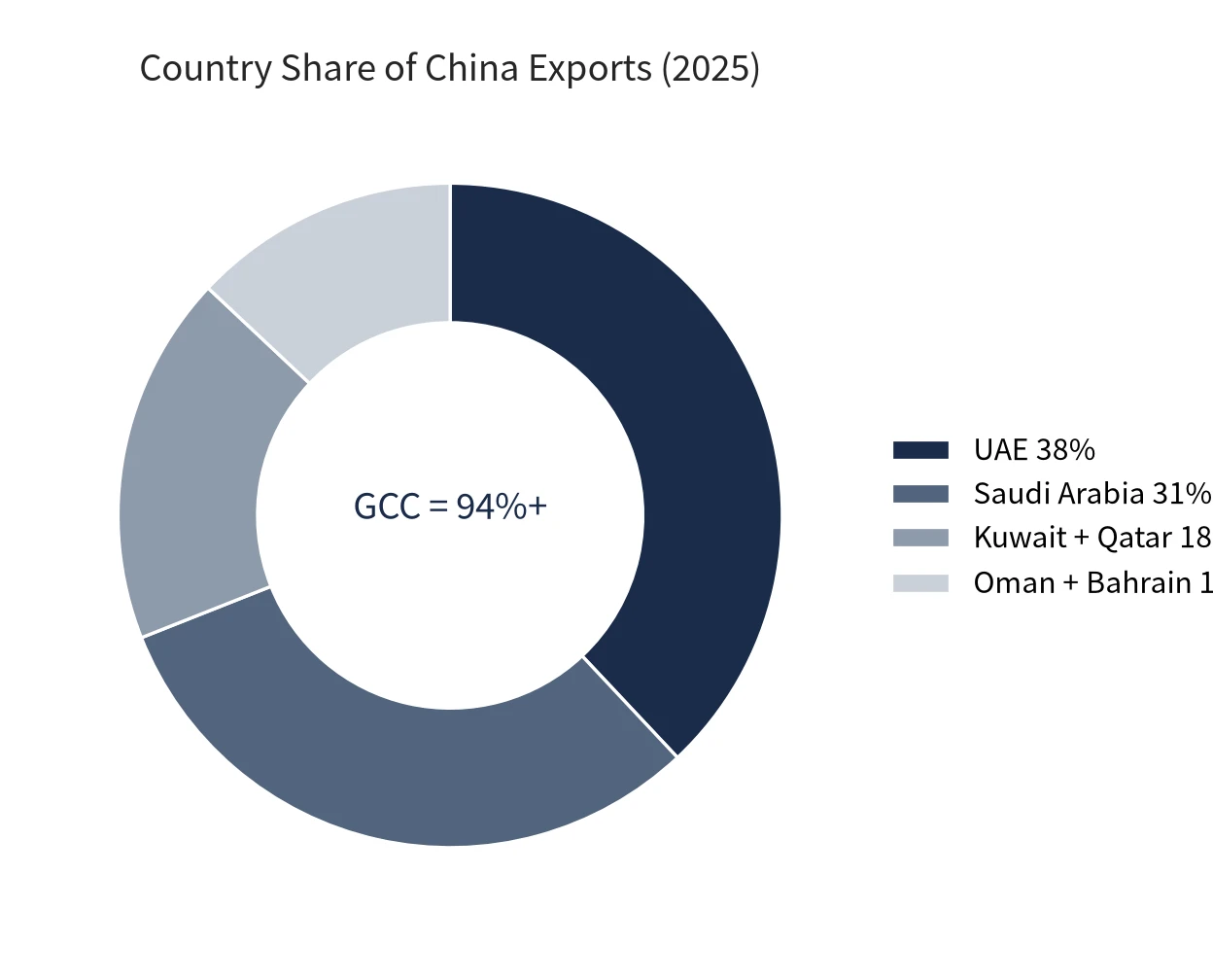
Figure 2 Country share of China's adjustable-dumbbell exports (2025)
Data source: consolidated estimates; shares by export value.
The UAE (about 38%) is the region's largest and most diversified market. Compact urban apartments favour space-saving adjustable dumbbells; demand spans cross-border e-commerce, local distributors and boutique gyms, and Dubai acts as a re-export hub for neighbouring Arab markets.
Saudi Arabia (about 31%) is the fastest-growing market. Vision 2030 health-promotion policies keep launching home-fitness and new commercial-gym projects; buyers prefer heavy specifications (52.5lb, 90lb) and place larger B2B orders, making the market the most important for OEM/private-label work.
Kuwait and Qatar (combined about 18%) are high-income niche markets with higher unit prices than the UAE and strict requirements on appearance, surface finish and packaging. Oman and Bahrain (combined about 13%) are smaller price-sensitive markets driven mainly by entry-level lightweight models (10–20kg) through retail and small distributors.
4. Product Mix Shifted Toward Commercial Heavy-Duty and 3-in-1 Home Models
By shipment volume, the 20–24kg 3-in-1 home model is the top seller at about 47%, followed by 26–32kg at 28%. Heavy commercial models (52.5lb / 40–60kg) reached about 22% and their share keeps rising after 2023 as gym procurement grows; smart APP-connected models remain a small 3% premium niche mostly sold to UAE private-training studios.
|
Segment |
Share of shipments |
Notes |
|
20–24kg 3-in-1 home |
47% |
Top seller; Dubai exhibitions consistently popular |
|
26–32kg |
28% |
Mid-range home/commercial |
|
52.5lb / 40–60kg commercial |
22% |
Share rising since 2023; gym procurement |
|
Smart APP-connected |
3% |
Small premium niche, mainly UAE studios |
Table 2 Product mix by weight specification (share of shipments)
Data source: consolidated estimates by shipment sets, 2025.
Cast iron with an ABS shell is the dominant material combination at about 89%. Because of the hot regional climate, buyers emphasise salt-spray and high-temperature ageing tests, anti-rust treatment, and moisture-proof 5-layer K=K corrugated packaging. In terms of order model, OEM white-label (about 82% in 2020) is being partly replaced by ODM private-label work, which rose to about 35% by 2025 as local importers build their own fitness brands.
5. Channel Structure Switched from E-commerce to B2B Distributors and Gym Procurement
In 2020, cross-border platforms (Noon, Souq) drove around 46% of sales during the pandemic; by 2022 the online share fell to about 35% and offline channels rose, and by 2025 B2B distributors plus gym bulk procurement reached about 68% while e-commerce settled at about 32%, with D2C direct-brand orders growing slowly.
Channel dynamics matter for entry strategy: large-volume orders are controlled by major local importing traders, whereas e-commerce is mostly small-batch replenishment with lower MOQs - a practical entry point for smaller factories testing the market.
6. Growth Drivers and Key Risks
6.1 Growth drivers
- Young populations in the GCC and national health strategies (notably Saudi Vision 2030) keep broadening the fitness consumer base.
- Limited urban living space favours adjustable dumbbells, which replace full sets of fixed dumbbells and save storage for both homes and gyms.
- A competitive Chinese supply chain enables fast private labelling and custom weight options at competitive FOB prices, with stable supply clusters in Shandong, Zhongshan and Nantong.
6.2 Key risks
- Geopolitical tensions and regional currency volatility can postpone orders and force price concessions.
- Changing customs-clearance rules and stricter audits of product certification (CE, safety certificates) raise entry hurdles.
- Volatile ocean freight rates and high inland logistics costs for landlocked destinations erode margins.
- Low-cost competition from Turkish fitness manufacturers diverts part of the orders.
7. Outlook for 2026
Growth is expected to moderate to roughly 14% as the market moves from pandemic-era acceleration to a steadier phase. Product demand should continue concentrating on 3-in-1 multi-functional lightweight home models and rising commercial heavy-weight orders. Buyer requirements are upgrading beyond price toward packaging, anti-rust performance, inspection reports and spare-parts support. Kuwait and Qatar hold the largest incremental potential, while Saudi gym-construction projects keep releasing bulk demand; intensifying price competition makes plain white-label low-price business less attractive and favours ODM customisation and co-brand development.
8. Business Recommendations
- Market priority: Saudi Arabia > UAE > Kuwait & Qatar, with Oman and Bahrain as supplementary markets.
- Product: prioritise the 24kg 3-in-1 core SKU plus the 52.5lb commercial version; complete salt-spray and drop tests before shipment.
- Trade terms: Middle East buyers prefer FOB; use partial shipments on long-term contracts; secure a certificate of origin for customs clearance.
- Compliance: prepare CE and SGS material-test reports; use bilingual (Arabic + English) packaging labels.
Notes on Data Limitations
The data in this report are directional estimates rather than official customs statistics, because adjustable dumbbells are not reported under a dedicated HS code. The 2026 figures are a forecast based on first-half performance. Users should treat absolute values as indicative and rely primarily on the relative structure, growth trajectory and country/product distribution when making sourcing or entry decisions.