Sales Analysis Report (2020–2026)
1. Executive Summary
Chinese exports of adjustable dumbbells to Europe boomed in 2020–2021 on pandemic home-fitness demand, fell in 2022 amid European inflation and channel destocking, then recovered steadily through 2023–2026 as demand shifted from panic buying to home-gym upgrades and small commercial studio replacement.
Key European markets rank: Germany > UK > France > Netherlands > Spain > Italy. The main barriers are EU compliance rules - RoHS, REACH, PPWR packaging regulation and carbon-footprint requirements - which create a clear advantage for certified factories. 2026 will see moderate growth, not a new surge.
2. Export Volume & YoY Trend
Table 1 Estimated export volume to Europe, 2020–2026
|
Year |
Volume (10k sets) |
YoY |
Market Stage |
Key Drivers / Pressures |
|
2020 |
42.6 |
+87% |
Boom |
Lockdowns; surging e-commerce orders; tight shipping space |
|
2021 |
61.3 |
+43.9% |
Peak |
Retailer mass stocking; demand for space-saving home gear |
|
2022 |
44.8 |
-26.9% |
Downturn |
High inflation; fading pandemic demand; channel overstock |
|
2023 |
47.5 |
+6.0% |
Bottom Recovery |
Inventory cleared; small gym demand rises; EU warehouse rollout |
|
2024 |
51.8 |
+9.1% |
Steady Growth |
Eco materials, smart models; DTC & independent site growth |
|
2025 |
56.4 |
+8.9% |
Upward Trend |
EU environmental rules; orders concentrate in certified factories |
|
2026E |
60.2 |
+6.7% |
Stable Growth |
Slower growth; higher compliance cost; smart dumbbells add volume |
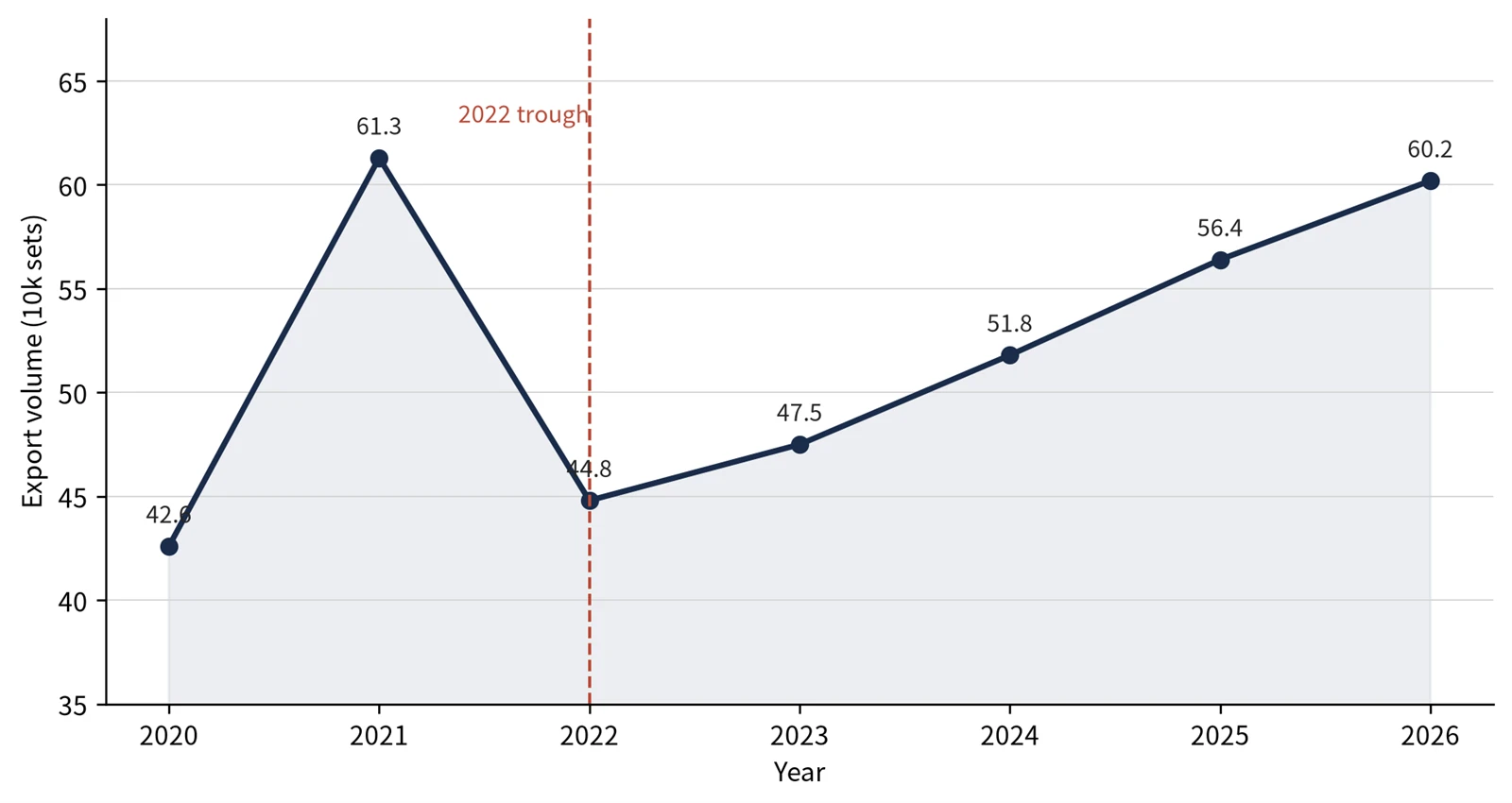
Figure 1 Export volume trend, 2020–2026 (10k sets)
Data source: industry estimation; 2026E is a full-year forecast.
3. Market Phases
3.1 2020–2021: Pandemic Boom
Gym closures pushed European households to buy home strength equipment; dial-type adjustable dumbbells (24/32/40 kg) were bestsellers. E-commerce and major retailers placed large OEM orders, but container shortages and high freight lengthened delivery times.
3.2 2022: Correction Period
Consumers returned to gyms and inflation cut spending on non-essentials. Retailers cut orders and destocked, price competition intensified, and order volumes fell sharply.
3.3 2023–2026: Structural Recovery
Demand shifted from panic buying to sustained home fitness and small commercial replacement. Growth is healthier but much slower than the pandemic period, and it is increasingly driven by DTC brands and EU overseas-warehouse fulfillment rather than large retailers alone.
4. Regional Market Breakdown
- Germany: Largest European market; strict safety & environmental standards; strong demand for certified 32–40 kg dial models.
- UK: Very high e-commerce share; separate customs rules post-Brexit raise clearance complexity.
- France / Netherlands: Eco-friendly packaging and recycled materials preferred by retailers and consumers.
- Southern Europe (Spain, Italy): Price-sensitive, entry-level models dominate; demand fluctuates more with inflation.
5. Key Drivers & Risks
5.1 Advantages
- Supply chain: A complete steel, coating, plastic and assembly supply chain; Europe has almost no scalable local capacity.
- Retained habit: The home-gym habit persisted after the pandemic, and small urban housing continues to favor space-saving adjustable dumbbells.
- E-commerce: EU overseas warehouses shorten delivery; DTC brands give factories direct end-customer access.
- Product iteration: Eco and smart models open the premium segment and lift prices and margins.
5.2 Risks
- Compliance: Tighter EU packaging, chemical and carbon rules raise certification and compliance costs.
- Competition: Heavy homogenization drives price wars and uneven quality, hurting Chinese product reputation.
- Costs: Steel, plastic, freight and EU warehousing labor costs fluctuate, squeezing margins.
- Macro: Weak Eurozone consumer confidence keeps demand for big-ticket fitness items volatile.
6. Product Structure & Pricing Trend
- Dial-type (main): Dial-type: ~75% of European exports; the main volume item with heavy FOB price competition; compliance and stable quality win long-term orders.
- Quick-change: Quick-change plate type: fast-growing, suited to small commercial studios, higher unit price.
- Smart: Smart adjustable dumbbells: fastest growth, premium pricing in Germany and UK, but higher development and certification cost.
7. Outlook (2026–2027) & Strategic Suggestions
2026 is expected to close at about 60.2k sets with growth easing to 6.7%. The European market will not repeat the pandemic surge; it is entering a replacement-and-slow-penetration phase. Recommended actions:
- Segmentation: Certified mid-high products for Germany/Nordic; cost-controlled entry models for Southern Europe.
- Localization: KG-scale products, REACH/RoHS testing, PPWR-compliant recyclable packaging; avoid lb-marked items.
- Channels: Combine large-retailer OEM with DTC brand sales; use EU warehouses for faster delivery.
- Portfolio: Basic models for volume, eco/smart models for margin and differentiation.
Data note: all volumes are industry estimates in sets; 2026E is a full-year forecast. Europe covers EU + UK (excluding Russia). China is the main global manufacturing base for adjustable dumbbells.