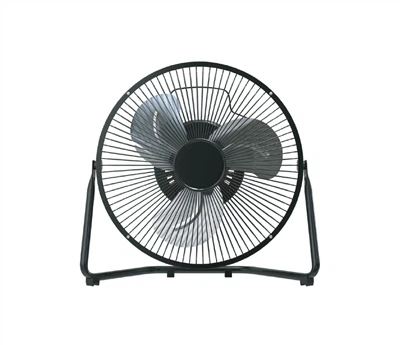
Hey there! As a desktop fan supplier, I've gotten tons of questions about air - flow efficiency. So, I thought I'd break it down for you all.
First off, what exactly is air - flow efficiency? Well, it's basically how well a fan can move air from one place to another. When you're sitting at your desk on a hot day, you want that fan to push as much cool air your way as possible, right? That's where air - flow efficiency comes in.
There are a few factors that determine the air - flow efficiency of a desktop fan. The size of the fan blades is a big one. Generally speaking, larger blades can move more air. Take our 12 Inch Desktop Fan for example. With its 12 - inch blades, it has a wider sweep area. This means it can cover more space and move a larger volume of air compared to smaller fans.
Another important factor is the pitch of the blades. The pitch is the angle at which the blades are set. A steeper pitch can catch more air and push it forward with more force. But it's a bit of a balancing act. If the pitch is too steep, the fan might use more energy and make more noise. Our engineers have spent a lot of time finding the perfect pitch for each of our fans to maximize air - flow while keeping energy consumption and noise levels in check.
The motor also plays a crucial role in air - flow efficiency. A powerful motor can spin the blades faster and more consistently. A weak motor might struggle to keep the blades turning at a good speed, especially if the fan has larger or more pitched blades. We use high - quality motors in all our desktop fans to ensure they can deliver optimal air - flow.
Now, let's talk about some of our other popular models. The 9 Inch Dual Window Fan is a great option for those who want a bit more flexibility. It has two fans that can be adjusted independently. This allows you to direct the air in different directions, which can be really useful if you're sharing a workspace or if you want to create a cross - breeze. The 9 - inch size is also a good middle ground between the larger 12 - inch fan and the smaller ones.
Then there's our 8 Inch Desktop Fan. It's a compact and portable option. It's perfect for small desks or for taking with you on the go. Even though it's smaller, we've still managed to pack a lot of air - flow power into it. The 8 - inch blades are designed to move air efficiently in a more concentrated area.


When it comes to measuring air - flow efficiency, one common metric is cubic feet per minute (CFM). CFM measures the volume of air that a fan can move in one minute. A higher CFM means the fan can move more air. But it's not the only thing to consider. You also have to think about how evenly the air is distributed and how far it can reach.
We've done a lot of testing on our fans to make sure they have a good balance of CFM, air distribution, and reach. For example, we set up test rooms with sensors to measure the air - flow at different distances and angles from the fan. This helps us fine - tune the design of the fans to make them as efficient as possible.
In addition to the physical design, the way you use the fan can also affect its air - flow efficiency. For instance, if you place the fan too close to a wall or other objects, it can disrupt the air - flow. It's best to give the fan some space so that the air can circulate freely. Also, make sure the fan is clean. Dust and dirt on the blades can slow them down and reduce air - flow.
If you're in the market for a new desktop fan, I hope this post has given you a better understanding of air - flow efficiency. We've worked hard to develop a range of fans that offer great air - flow performance, energy efficiency, and quiet operation. Whether you need a large fan for a big workspace or a small, portable one, we've got you covered.
If you're interested in purchasing our desktop fans or have any questions about air - flow efficiency or our products in general, don't hesitate to reach out. We're always happy to help you find the perfect fan for your needs. Let's start a conversation about how we can keep you cool and comfortable at your desk.
References
- Engineering Principles of Fan Design, published by an industry - leading engineering journal
- Studies on Air - flow Optimization in Small - Scale Fans, research papers from a well - known university's engineering department