As a supplier of Bucket Towel Warmers, I've received numerous inquiries about the heat distribution of these innovative appliances. The question on everyone's mind is, "Do bucket towel warmers have a uniform heat distribution?" In this blog post, I'll delve into the science behind heat distribution in bucket towel warmers, explore the factors that influence it, and share how our products ensure a consistent warming experience.
Understanding Heat Distribution
Before we can answer the question, it's important to understand what heat distribution means. Heat distribution refers to how evenly heat is spread throughout a space or object. In the context of a bucket towel warmer, it means that all towels placed inside the warmer should reach and maintain a similar temperature.
To achieve uniform heat distribution, several factors come into play. These include the design of the warmer, the type of heating element used, and the airflow within the unit. Let's take a closer look at each of these factors.
The Design of the Bucket Towel Warmer
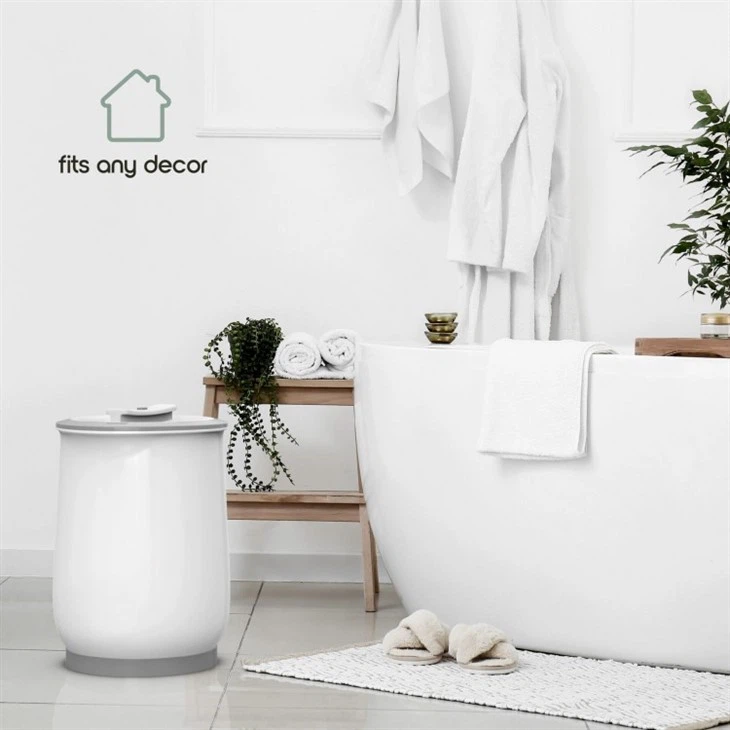
The design of a bucket towel warmer plays a crucial role in its heat distribution. A well-designed warmer will have a shape and size that promotes even heat circulation. For example, our Bucket Towel Warmer is designed with a cylindrical shape that allows heat to radiate evenly from the center. This ensures that all towels placed around the perimeter of the warmer are exposed to the same amount of heat.
In addition to the shape, the interior of the warmer is also designed to optimize heat distribution. Our bucket towel warmers feature a series of shelves or racks that hold the towels in place. These shelves are strategically placed to allow air to flow freely between the towels, preventing any hot or cold spots from forming.
The Type of Heating Element
The type of heating element used in a bucket towel warmer also affects its heat distribution. There are several types of heating elements available, including electric coils, ceramic heaters, and infrared heaters. Each type has its own advantages and disadvantages when it comes to heat distribution.
Electric coils are the most common type of heating element used in bucket towel warmers. They work by converting electrical energy into heat, which is then radiated into the surrounding space. While electric coils are relatively inexpensive and easy to manufacture, they can sometimes produce uneven heat distribution. This is because the coils tend to heat up more in the center, creating a hot spot.
Ceramic heaters are another popular option for bucket towel warmers. They work by heating up a ceramic plate, which then radiates heat into the surrounding space. Ceramic heaters are known for their energy efficiency and even heat distribution. They are also less likely to produce hot spots than electric coils.
Infrared heaters are the most advanced type of heating element used in bucket towel warmers. They work by emitting infrared radiation, which is absorbed by the towels and converted into heat. Infrared heaters are known for their fast heating times and even heat distribution. They are also more energy efficient than electric coils and ceramic heaters.
At our company, we use a combination of ceramic and infrared heating elements in our Bucket Towel Warmer. This allows us to provide our customers with the best of both worlds: fast heating times and even heat distribution.
The Airflow within the Unit
The airflow within a bucket towel warmer is also an important factor in its heat distribution. Proper airflow ensures that heat is circulated evenly throughout the unit, preventing any hot or cold spots from forming.
To ensure proper airflow, our bucket towel warmers are designed with a series of vents or holes in the sides and bottom of the unit. These vents allow air to enter and exit the warmer, creating a natural convection current. This current helps to circulate the heat evenly throughout the unit, ensuring that all towels are heated to the same temperature.
In addition to the vents, our bucket towel warmers also feature a fan that helps to circulate the air within the unit. The fan is strategically placed to blow air over the heating element, ensuring that the heat is evenly distributed throughout the unit.
Our Commitment to Uniform Heat Distribution
At our company, we are committed to providing our customers with the highest quality bucket towel warmers on the market. That's why we take great care to ensure that our products have a uniform heat distribution.
To achieve this, we use only the highest quality materials and components in our manufacturing process. Our heating elements are carefully selected and tested to ensure that they provide even heat distribution. Our interior shelves and racks are designed to optimize airflow, preventing any hot or cold spots from forming.

In addition to our commitment to quality, we also offer a comprehensive warranty on all of our products. This gives our customers peace of mind knowing that they are investing in a product that is built to last.
Conclusion
So, do bucket towel warmers have a uniform heat distribution? The answer is yes, but only if they are designed and manufactured properly. At our company, we take great care to ensure that our Bucket Towel Warmer and Luxury Countertop Towel Warmer have a uniform heat distribution. We use only the highest quality materials and components, and we test our products rigorously to ensure that they meet our strict standards.
If you're in the market for a bucket towel warmer, we invite you to contact us to learn more about our products. Our team of experts is available to answer any questions you may have and to help you choose the right product for your needs. We look forward to hearing from you and to helping you enjoy the luxury of warm, dry towels every day.
References
- "Heat Transfer: A Practical Approach" by Yunus A. Cengel
- "Thermodynamics: An Engineering Approach" by Yunus A. Cengel and Michael A. Boles
- "Fundamentals of Heat and Mass Transfer" by Frank P. Incropera and David P. DeWitt