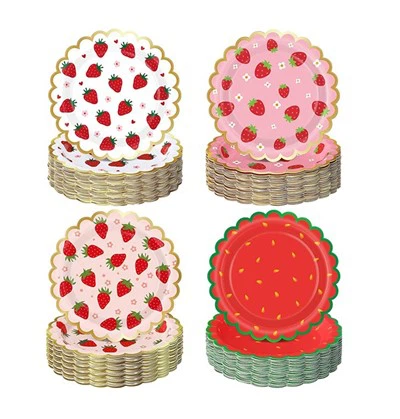
Disposable paper plates are widely used in catering, outdoor activities, family gatherings and other scenarios due to their environmental friendliness, convenience and hygiene. With the upgrading of green consumption concepts, modern disposable paper plate production technology has realized automated, high-efficiency and low-consumption manufacturing, while ensuring product safety, structural stability and environmental degradability. This article systematically introduces the complete industrial production process of disposable paper plates, including raw material preparation, pretreatment, forming, post-processing, quality inspection and finished product packaging.
1. Raw Material Selection and Preparation
The quality of disposable paper plates is fundamentally determined by raw materials. Qualified production raw materials must meet food-grade safety standards and have good toughness, heat resistance and moldability. At present, the mainstream raw materials are food-grade wood pulp paperboard, bamboo pulp paperboard and recycled environmental-friendly pulp paperboard, with a grammage ranging from 180g/㎡ to 350g/㎡ according to product specifications.
For ordinary daily-use paper plates, single-layer food-grade paper rolls are adopted; for thickened, high-load and heat-resistant paper plates used for hot food, double-layer composite paperboard or reinforced pulp materials are selected. Before production, raw paper rolls need to be inspected in advance to check surface flatness, thickness uniformity, no peculiar smell and no harmful chemical residues. Unqualified raw materials are strictly eliminated to avoid affecting food safety and product quality. In addition, food-grade water-based coating materials are prepared for waterproof and oil-proof treatment of paper plates, which conform to international food contact safety regulations.
2. Paper Pretreatment and Blank Cutting
The first step of formal production is raw paper unwinding and pretreatment. The inspected paper rolls are loaded on the automatic feeding machine, and the equipment automatically unwinds and tensions the paper material to ensure the paper surface is flat and free of wrinkles and deviation, laying a foundation for subsequent precise cutting and forming.
Then, the paper material enters the die-cutting process. The automated die-cutting machine cuts the continuous paper roll into standard circular or special-shaped paper

blanks according to the preset size of paper plates. The whole process realizes high-speed and precise cutting, which can ensure consistent size and regular edge of each paper blank. For small-batch customized products, fine die-cutting molds are used to complete special shape cutting. After cutting, the paper blanks are automatically sorted and stacked by the equipment to remove defective materials such as incomplete cutting and edge damage, ensuring the uniformity of subsequent forming processing.
3. Thermoforming and Hydraulic Shaping (Core Process)
Forming is the core link of disposable paper plate production, which directly determines the three-dimensional shape, structural strength and use effect of the product. The mainstream production adopts integrated hydraulic thermoforming technology. The qualified paper blanks are automatically transported to the forming mold station, and placed between the matched male and female molds.
The equipment adopts hydraulic pressure system to provide stable pressure, and cooperates with constant temperature heating (150-200℃) to heat the paper blanks, so that the paper material becomes flexible and malleable. Under the action of mold pressure and vacuum shaping, the paper blank is fully fitted with the mold cavity to form the concave structure of the paper plate. The constant temperature heating process can effectively fix the plate shape, enhance the structural toughness of the paper plate, and prevent deformation and collapse during use.
After thermoforming, the equipment automatically demoulds the semi-finished paper plates. The whole forming process is completed in one step by automated machinery, with high molding efficiency and good product consistency, which avoids the problems of uneven force and irregular shape in manual processing.

4. Edge Trimming and Surface Treatment
The semi-finished paper plates after demoulding have rough edges and burrs, which need fine edge trimming treatment. The automatic trimming machine cuts and polishes the edges of the paper plates to make the edge lines smooth and neat, eliminating sharp edges and ensuring safe use. For high-grade paper plates, secondary rounding treatment is carried out on the plate edges to further improve the appearance and comfort.
In terms of surface treatment, according to product usage requirements, waterproof and oil-proof coating processes are added. The micro-gravure coating system is used to uniformly coat food-grade water-based waterproof and oil-proof agent on the surface of the paper plate. The online thickness detection system monitors the coating thickness in real time to ensure uniform coating and stable quality. After coating, the multi-stage hot air circulation drying system is used for curing treatment. The temperature gradient of each section is strictly controlled, so that the coating is fully cured and the solvent is completely volatilized, effectively improving the heat resistance, waterproof and oil-proof performance of the paper plate, and preventing oil leakage and water seepage when holding hot meals and soups.
5. Drying and Dehumidification Treatment
To solve the problem of easy mildew and soft deformation of paper plates caused by excessive moisture, all semi-finished products need to go through secondary drying and dehumidification process. The trimmed and coated paper plates are sent to the constant temperature drying channel, and the drying temperature and time are accurately controlled according to the thickness and grammage of the product.
The hot air circulation drying mode is adopted to ensure uniform heating of each part of the paper plate, remove residual moisture inside the paper fiber, stabilize the product shape and enhance the structural strength. After drying, the paper plates are naturally cooled in a constant temperature and dust-free environment to avoid surface wrinkling and deformation caused by rapid temperature change, and the moisture content of the finished product is controlled within the standard range to ensure long-term storage resistance and mildew resistance.

6. Strict Quality Inspection
Quality inspection runs through the whole production process, and finished products need to pass comprehensive inspection before packaging. The inspection items include appearance quality, structural performance, safety indicators and physical and chemical detection. In terms of appearance, inspect the paper plates for wrinkles, deformation, burrs, stains, uneven coating and other defects; in terms of structural performance, test the bearing capacity, compression resistance and heat resistance of the paper plates to ensure no deformation or damage when bearing food of a certain weight and temperature.
In terms of safety indicators, sampling inspection is carried out on harmful substance residues, heavy metal content and microbial indicators to ensure that all indicators meet food contact safety standards. In addition, random sampling is conducted for waterproof and oil-proof performance tests to verify the stability of the coating effect. All qualified products are screened out, and unqualified products are recycled and reprocessed in a classified manner to ensure zero outflow of defective products.
7. Sterilization, Packaging and Storage
Qualified paper plates will enter the final sterilization and packaging link. The finished products are sterilized by low-temperature ultraviolet sterilization technology, which can effectively kill surface microorganisms without damaging the paper material and coating performance, ensuring the hygienic safety of the products.
After sterilization, the automatic packaging machine counts and packs the paper plates in fixed quantities. According to market demand, single-pack, multi-pack and boxed packaging specifications are adopted. The packaging materials are food-grade safe and dust-proof, which can effectively isolate dust, moisture and bacteria. After packaging, the product information, production date, shelf life and qualification marks are printed on the outer package. Finally, the finished products are stored in a dry, ventilated and constant temperature warehouse, classified and stacked, and recorded in and out of the warehouse to facilitate subsequent transportation and sales management.

8. Environmental Protection Process Advantages
Modern disposable paper plate production technology adheres to the concept of green environmental protection. All raw materials are degradable plant fiber materials, which can be naturally degraded after use, causing no pollution to the environment. The production process adopts closed-loop water circulation system and low-energy heating equipment, which reduces resource consumption and energy waste. Moreover, the defective products and waste materials generated in the production process are fully recycled and reused, realizing resource recycling and meeting the requirements of sustainable development.
Conclusion
The production of disposable paper plates is a systematic and standardized industrial process integrating raw material screening, precision processing, thermoforming, surface finishing, quality detection and environmental protection treatment. With the continuous upgrading of production equipment and technology, the modern paper plate production process has the characteristics of high efficiency, low consumption, safety and environmental protection. Strict process control and quality inspection standards ensure that disposable paper plates can meet the dual requirements of daily use convenience and food safety, and also lay a foundation for the long-term development of the green disposable tableware industry.