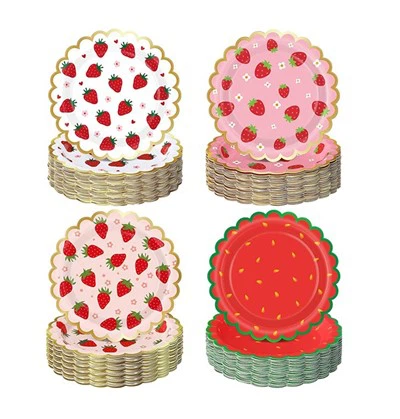
Disposable paper plates are essential food contact packaging products that are widely used in catering, retail, family gatherings, and outdoor activities. With the increasingly stringent global food safety and environmental protection regulations, disposable paper plate manufacturers must obtain corresponding standard certifications to enter mainstream markets in overseas regions such as North America, Europe, and Australia. This article systematically organizes all mandatory and mainstream recommended certifications for the export of disposable paper plates.
1. Food Safety Certification (Mandatory for All Overseas Markets)
Food safety certification is the basic threshold for paper plates to directly contact food. It detects the migration of harmful substances, heavy metal content, and raw material safety to ensure there is no risk of food contamination.
1.1 FDA 21 CFR (USA Market)
FDA certification is a mandatory standard for all food contact products entering the United States. Disposable paper plates must comply with FDA 21 CFR Part 176.170 & 176.180.
Key detection items include heavy metal migration, chemical residue, raw material safety, and compliance with GMP production specifications. There is no official FDA certificate. Buyers accept third - party test reports and FDA compliance letters issued by authoritative laboratories such as SGS and Intertek.
1.2 EU 1935/2004 & LFGB (European Market)
EU 1935/2004: The core framework regulation for EU food contact materials. All paper plate products sold in the EU must provide a DoC (Declaration of Conformity) to prove product safety and inertness.
LFGB (Germany): The most stringent food safety standard in the European market and a global industry benchmark. It covers overall migration, specific substance migration, odor and taste sensory tests, and prohibits harmful substances such as primary aromatic amines.
2. Compostability & Environmental Protection Certification (Core for Eco-Friendly Paper Plates)
With the global plastic restriction and zero - carbon policies, degradable and compostable certifications have become a necessary condition for most European and American supermarket procurements. Ordinary non - degradable paper plates without relevant certifications are facing market bans.
FDA 21 CFR is the mandatory food contact material regulation implemented by the U.S. Food and Drug Administration, which is the basic access requirement for paper plates and other food contact products to enter the U.S. market. This regulation clarifies the allowable ingredient range for food contact materials, specifies the limit standards for harmful substance migration, and requires that products do not produce toxic or harmful residues that endanger human health when contacting food. For eco-friendly paper plates, relevant material components must meet the corresponding food safety requirements specified in FDA 21 CFR to pass the market access review.
Products made of raw materials that do not meet the regulatory provisions will be directly detained or rejected when they are declared for entry into the United States, and cannot enter the formal sales channel. Therefore, for any enterprise that intends to develop the U.S. food contact product market, obtaining compliance in accordance with FDA 21 CFR is the first required step for market access.
2.1 BPI & ASTM D6400 (North America)
BPI certification is the authoritative composting certification recognized by the United States and Canada, complying with the ASTM D6400 standard. Products marked with "compostable" in North America must pass BPI certification, which requires complete industrial composting and no environmental residue.
2.2 EN 13432 & TÜV OK Compost (Europe)
EN 13432: Mandatory composting standard for EU disposable biodegradable products, requiring more than 90% biodegradation within 180 days under industrial composting conditions.
TÜV OK Compost: Divided into OK Compost Industrial (industrial composting) and OK Compost Home (home composting). Home composting certification has higher technical requirements and is more popular with high-end European buyers.
2.3 ABA Certification (Australia & New Zealand)
ABA Home Compost certification is a local mandatory eco-standard for Australia and New Zealand, applicable to all degradable disposable tableware including paper plates.
It is mainly regulated by the Australian Biodegradable Association, with clear requirements for the biodegradation rate, heavy metal content and plant toxicity of products under home composting conditions, which is the core access threshold for degradable product sales in the Australia and New Zealand market.
3. Raw Material Forestry Certification (High-Value Export Certification)
Mainstream European and American brands and supermarkets take forest sustainable certification as an important procurement assessment standard to avoid illegal logging and deforestation risks.
3.1 FSC Certification
FSC Chain of Custody certification proves that the paper raw materials of disposable paper plates come from legally and sustainably managed forests. It is the most recognized forest certification in the global high - end market.
For disposable degradable paper products exported to Europe, America and other high-value export markets, most large chain retailers and branded buyers will explicitly require suppliers to hold a valid FSC Chain of Custody certificate when placing procurement orders. Products without corresponding certification will be directly excluded from the supplier cooperation list, which makes this certification a necessary entry ticket for opening up the high-end paper product export market. To obtain the certification, enterprises need to complete a full-process review of raw material procurement, production processing, product storage and transportation, and establish a complete traceable material accounting system to ensure that every batch of finished products can trace the source of raw materials back to the certified compliant forest.
3.2 PEFC Certification
As an alternative to FSC, PEFC is widely recognized in Europe. It has lower certification costs and a shorter cycle, making it suitable for the mass export of medium and low - end paper plate products.
Similar to FSC certification, PEFC certification also requires enterprises to complete systematic review covering raw material source verification, production process control, and finished product management, and keep complete supporting records to prove that all wood-based raw materials used come from legally managed and environmentally compliant forests that meet PEFC standards. The certification result is valid for a certain period, and enterprises need to accept regular supervision audits to maintain the validity of the certification.
4. PFAS-Free Certification (Global Mandatory Trend)
PFAS (per- and polyfluoroalkyl substances) are permanent toxic chemicals used for oil-proof and waterproof coating of paper plates. At present, the United States, the European Union, Canada and other regions have completely banned PFAS-containing disposable tableware.
Paper plate exporters must provide PFAS-free test reports (tested by SGS/Eurofins) to meet global buyer requirements and customs inspection standards.
PEFC, or the Programme for the Endorsement of Forest Certification, is an international forest certification system that guarantees the paper raw material used for paper plates comes from sustainably managed forests. For paper plate enterprises targeting the European and North American markets, obtaining PEFC certification can prove that their products comply with international sustainable sourcing requirements, helping them gain recognition from brand buyers and meet procurement standards that prioritize environmental responsibility. To get this certification, enterprises need to go through raw material source verification, production process inspection and third-party auditing to confirm that the full supply chain meets PEFC's sustainable management rules.
5. Factory System Certification (Basic Qualification for Large Buyers)
- ISO 9001: Quality management system certification, proving standardized production and stable product quality.
- ISO 14001: Environmental management system certification, meeting international environmental protection production standards.
6. Market Certification Matching Summary
USA Market: FDA 21 CFR + BPI (ASTM D6400) + PFAS-Free + FSC (Recommended)
EU Market: EU 1935/2004 + LFGB + EN 13432 + TÜV OK Compost + PFAS-Free
Australia & New Zealand: ABA Compost + PFAS-Free + Food Grade Test
Global High-End Customization: Full set of food safety + composting + FSC + PFAS-free certifications
Conclusion
For the export of disposable paper plates, food safety certification is the basic market access threshold. Composting and PFAS - free certifications are the core requirements for current overseas orders, and forestry and factory system certifications are key advantages for developing high - end buyers and long - term large orders. Complete certification qualifications can effectively avoid customs detention, customer returns, and order disputes, and greatly enhance the international market competitiveness of products.