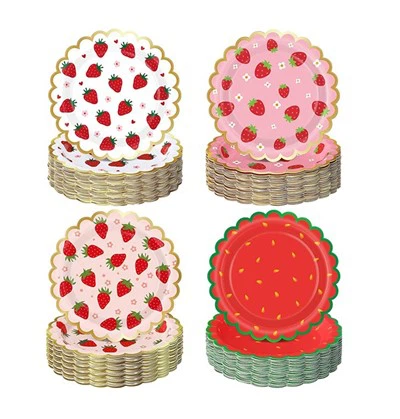
Production facility for sugarcane bagasse paper plates, molded paper plates, and laminated paper plates on Batam Island and Java Island in Indonesia; serving US importers, Amazon sellers, offline supermarkets, and food chain buyers, offering comprehensive solutions including mandatory customs clearance certification, state-specific regulatory compliance, factory system certification, and complete set of supporting customs documentation.
I.Compulsory market access certification in the United States (essential for customs clearance; both are mandatory)
1. FDA Food Contact Material Compliance Certification (U.S. mandatory under 21 CFR Part 176.170)
Applicable products: bagasse paper plates, natural color paper plates, PLA/PE coated oil-resistant paper plates, and color-printed food paper plates-all paper tableware items that come into direct contact with food..
Regulatory requirements specify that paper products, being indirect food-contact materials, must undergo migration testing conducted by third-party laboratories certified under ISO 17025 standards, with leading institutions including SGS, Intertek, and Eurofins.
Core testing items: (1) Limit value determination for chloroform-soluble extracts; (2) Heavy metal leaching: lead, cadmium, mercury, hexavalent chromium; (3) Formaldehyde, pentachlorophenol (PCP), and fluorescent whitening agents (strictly prohibited); (4) Multi-scenario food immersion simulation tests (cold water, hot meals, acidic foods, fatty foods); (5) Separate 21 CFR food contact testing for coating layers and printing inks.
Required supporting documents: (1) Third-party English testing report; (2) COC compliance statement sealed by the manufacturer, which shall indicate the product model and material, confirm compliance with 21CFR standards, and be attached with raw material supplier filing materials..
2. PFAS-free fluorine-free oil resistance testing (mandated by laws of multiple U.S. states, and is a hard requirement of the Amazon platform))
Policy Background: More than ten states, including California, New York, and Washington, have comprehensively banned food packaging containing perfluorinated substances (PFAS). U.S. e-commerce platforms mandate the provision of PFAS-free certification for products; non-compliant items are immediately removed from shelves and may even be seized and destroyed at ports.
Detection Standard: The limit of detection for perfluorinated substances shall be less than 10ppb. Original oil-resistant bagasse products and PLA lamination products can meet the PFAS-free standard, while traditional fluorine-containing oil-resistant paper trays are prohibited from being sold to the United States..
Required Document: Special PFAS Testing English Report Issued by a Third-Party Laboratory.
3. IPPC Wood Packaging Fumigation Certificate (Mandatory for maritime customs clearance)
When goods are packaged externally with wooden pallets or wooden boards, the wooden materials must bear an IPPC heat treatment mark accompanied by a fumigation certificate. Goods lacking the IPPC mark will be detained and destroyed by customs upon arrival at U.S. ports, incurring substantial port detention and storage fines..
II.Environmental Compatible Composting Special Certification (a mandatory requirement for supermarket and eco-friendly product lines under California legislation) – BPI U.S. Industrial Composting Certification
- Legal requirements: Under California's AB1201 Act, product packaging printed with the phrase "Compostable" must bear a valid BPI certification; failure to obtain such certification constitutes false advertising and may result in substantial fines and a full product recall.
- Implementation Standard: Meets the ASTM D6400 industrial composting standard, which requires complete biodegradation within 180 days, with no residual heavy metals or microplastic precipitation.
- Applicable scenarios: Offline chain supermarkets, organic restaurants, and the environmentally-friendly category on Amazon. For general wholesale transactions without "compostable" labeling, this certification can be temporarily exempted. However, 90% of U.S. buyers still list it as a mandatory requirement.
- Supplement: OK Compost Home's certification recognition level is lower than that of BPI and serves only as a supplementary qualification.
III. Factory Production System Certification (Essential for major clients' factory inspections; voluntary but industry-wide requirement)
1. BRCGS Packaging: Food Packaging Safety System
These are the core audit criteria for Walmart, Costco, and major import wholesalers, covering raw material storage management, workshop cleanliness standards, ink quality control, batch traceability, and workshop disinfection and hygiene practices; they serve as the entry requirements for procurement by large retail chains.
ISO 22000 Food Safety Management System
It covers comprehensive control throughout the entire production process of food-contact products, with certificates issued by local Indonesian laboratories that can be used in conjunction with FDA reports for on-site facility inspections by clients.
FSC/PEFC Sustainable Forest Certification
This certificate is required only for paper plates made from wood pulp; bagasse-based plant fiber paper plates are exempt. High-end organic brands and importers often require this certification to verify the legal origin of wood materials and rule out illegal logging.
IV. Specific Additional Compliance Requirements for Each U.S. State1. California SB54 EPR Packaging Producer Responsibility Act
Paper tray products destined for California must undergo EPR registration by U.S. importers; Indonesian manufacturers are required to provide comprehensive information on product materials, raw composition, and recyclability characteristics to the U.S. authorities, in collaboration with customers to complete the registration process.
2. FTC Green Label Regulation
Do not arbitrarily print promotional phrases such as "recyclable" or "fully biodegradable".;
The printing of industrial compost labels is prohibited without a BPI certificate.;
Only when more than 60% of local communities have adequate recycling facilities can recycling labels be printed, thereby avoiding penalties for false advertising.
V. Compliance of Printing and External Packaging Labels (15 USC Fair Packaging Labeling Act)
- Required label fields: Product name, Net weight (ounces/pounds with metric notation), Indonesian manufacturing plant name, and U.S. local distributor address;
- Environmental labeling requirements: The BPI logo and PFAS-Free certification must correspond exactly to each test report.
Requirements for printing inks: All water-based inks must comply with the FDA standards for food-contact inks; the use of inferior recycled inks is prohibited..
VI. Complete set of customs clearance documents for Indonesian exports to the United States (uncertified, required to accompany the goods)
Commercial invoice, packing list;
- The Indonesian Certificate of Origin (CO) qualifies for the FORM E ASEAN certificate, enabling eligibility for U.S. tariff reductions.FDA COC
- Compliance declaration; complete set of English-language test reports for FDA and PFAS requirements.IPPC
- Fumigation certificate (applicable to wooden pallet packaging);BPI,BRCGS,ISO
- Copy of the system certificate;
- List of raw materials for pulp, coating films, and inks; MSDS (Safety Data Sheet)
VII. Simplified List for Authentication Across Different Customer Channels
- Standard U.S. offline wholesalers (no environmental labeling required): Mandatory: FDA test report, COC and PFAS test reports, IPPC fumigation certificate; Optional: ISO 22000 certification.
- For Amazon online sellers and supermarket retailers (printable compostable labels required): Mandatory certifications include FDA compliance, PFAS certification, BPI certification, and IPPC steaming certification; additional qualifications include BRCGS certification and FSC certification for wood pulp-based products.
All California chain restaurants and organic premium distribution channels are required to comply with mandatory standards: FDA, PFAS, BPI, and BRCGS regulations, while simultaneously submitting material documentation to assist importers in completing SB54 EPR registration.