Product Structure and Material Specifications
- A standard adjustable dumbbell consists of: a cast iron counterweight plate, a steel handle, a nylon adjustment lock mechanism, a rubber sheath, and anti-slip components.
- Balancing material: gray cast iron/spheroidal graphite cast iron (stable density and minimal weight variation)
- Central handle: Solid round steel bar/seamless steel pipe (bend-resistant, high-strength)
- Structural adjustment: PA66 nylon + steel pin (wear-resistant, noise-reducing, anti-clogging)
- Outer coating: Environmentally friendly PVC/rubber impregnated layer (anti-slip, impact-resistant, noise-reducing))
II. General Overview of the Overall Production Process
inbound inspection → Smelting and casting of blanks → Sand removal and annealing of blanks → CNC machining for hole drilling, milling grooves, and end face turning → Plastics coating and rubber wrapping of counterweights → Hand柄 polishing and electroplating → Assembly of adjustment components → Overall trial installation and debugging → Precise weighing and grading → Comprehensive appearance and functional inspections → Fall durability test → Cleaning, packaging, and warehousing
Step-by-Step Detailed Production Process
1Raw Material Inspection and Mixing Process
Raw materials entering the factory-including pig iron, scrap steel, plastic raw materials, and nylon raw materials-must undergo batch inspections to verify material density, hardness, and tensile parameters, ensuring controlled weight variations in finished products. The proportion of cast iron raw materials remains stable to prevent weight discrepancies in final products; plastic raw materials utilize newly developed eco-friendly pellets free from impurities or black spots from recycled materials, complying with VOC environmental standards for exports to Europe and America.
2. Smelting, casting, and molding (weight plate blank)
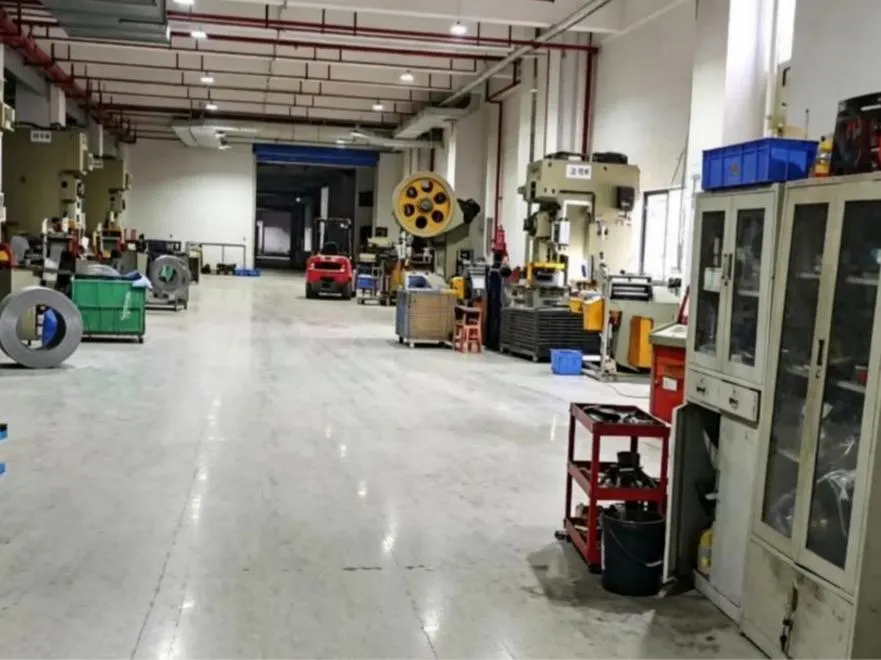
The prepared cast iron raw materials are fed into a medium-frequency smelting furnace, where they are melted at high temperatures to form molten iron. After constant temperature control, the molten iron is poured into precision metal molds. The molds employ multi-stage counterweight-specific designs to ensure uniformity in the shape, thickness, and hole diameter of each counterweight piece. Upon completion of pouring, the material naturally cools and solidifies, yielding the green product.
Key process points: Uniform cooling rate prevents porosity, sand holes, and deformation in the blank, while controlling weight variations and surface defects at the source.
3. Sand cleaning, annealing, and burr removal
The green casting is fed into the automatic shot blasting machine for sand removal, eliminating surface oxide layers and adhered sand. Subsequently, annealing treatment is performed to relieve internal casting stresses and prevent deformation or cracking during subsequent processing. Manual and mechanical secondary grinding is applied to all edges, holes, and end faces to ensure the absence of sharp edges or burrs, thereby complying with safety exit standards.
4. CNC precision machining (core accuracy process)
The precision of the adjustable dumbbell's gear positions is entirely determined by machining processes, which include: precision turning of the flat surfaces at both ends of the counterweight plate to ensure uniform thickness; precision boring of the center hole to maintain consistent clearance with the handle without jamming; milling of the gear slot to ensure accurate positioning of the adjustment lock points; and tolerance control of ±0.05 mm to guarantee smooth adjustment without loosening or wobbling of the plate5. Surface impregnation and rubber coating process for the counterweight plate
The adoption of a fully automated immersion molding production line dedicated to fitness equipment represents the core manufacturing process for exported dumbbells.:
Workpiece preheating → Immersion in PVC powder pool → Uniform-speed material feeding → High-temperature plasticizing leveling → Water-cooling setting process standards: uniform adhesive layer thickness with no exposed iron, no sagging, no bubbles, and no pinholes; matte and fine surface with anti-slip and wear-resistant properties, producing silent operation upon impact, meeting European and American requirements for household silent fitness equipment.

5. Handle Machining and Surface Treatment
The round steel bar undergoes cutting, straightening, tooth profiling, and precision polishing of the limit step, with removal of tool marks and rust spots. It is treated with trivalent chromium electroplating (an environmentally friendly process), ensuring rust resistance, sweat resistance, and corrosion resistance.Mid-section anti-slip texturing or anti-slip foam Coated for a comfortable grip without slipping
6. Production and Assembly of Structural Components
Adjustable dumbbell core durable structure: The nylon locking mechanism, positioning steel balls, springs, and gear clamps are all independently precision-machined. All components are uniformly sorted and pre-assembled to ensure uniform elasticity, clear positioning, crisp gear switching without lagging or disengagement.
7. Unit Assembly and Functional Commissioning
Install the weight plates in sequence according to their weight levels → Insert them into the lock core structure → Lock the end limit structures. Perform manual debugging for each unit: Conduct multi-stage switching tests throughout the process to ensure smooth switching, secure positioning, absence of loosening or abnormal noises, and consistent damping across all stages.

8. Precise weighing and grading (key quality control point))
All finished products are weighed on precision electronic scales and classified according to national standards or foreign trade specifications: the weight variation of each unit is strictly controlled within ±2%. Overweight or underweight products are individually reprocessed with counterweights or sorted to eliminate issues of inconsistent weights or mismatched pairs. The paired weights on both sides are identical to ensure balanced performance for customers.
9. Comprehensive quality inspection (factory standard)
Visual inspection: The adhesive layer is free from damage, color variation, or stains; the electroplating shows no peeling. Function testing: All gear shifts are reliably locked, with no shifting or gear disc shakeing. Durability sampling test: No loosening, sticking, or dropping after 500 repeated gear shifts. Noise test: No harsh metal impact sounds upon impact; the adhesive layer shows no peeling. Dimensional inspection: Total length, disc diameter, and hole diameter all comply with drawing tolerances.

10.Cleaning, labeling, packaging, and warehousing
Clean the finished product, affix specification/LOGO labels, apply protective film, place it in a color box/outer carton, and pack according to export standards. Ensure clear shipping marks on the outer carton, accurate quantity, moisture-proof and pressure-resistant packaging suitable for long-distance maritime transport.
III. Core Process Advantages (Adapted for UK/Europe and US Foreign Trade)
The castings exhibit stable density and minimal weight variation, meeting European and American standards for commercial fitness equipment. Featuring a fully automated dip-plating process, their surface texture rivals that of British Mirafit and York Fitness's household-grade nylon materials, complemented by a steel-ball locking mechanism for exceptional durability with an extremely low repair rate. Utilizing eco-friendly electroplating and innovative adhesives, the products comply with EU ROHS regulations and environmental export requirements, supported by stringent tolerance control throughout production. The system offers precise adjustment, quiet operation, anti-slip performance, and enhanced safety.