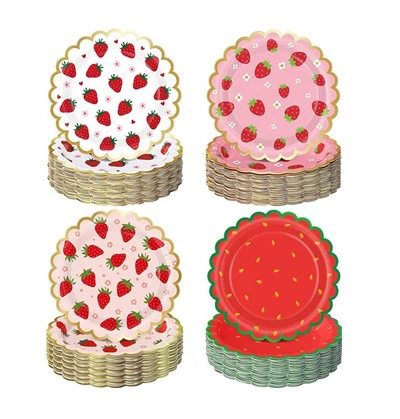
Report Overview
Product under study: Disposable paper dinner plates; Customs Harmonization System (HTSUS) codes: HTSUS 4823.69.0040 (standard coated paper plates, subject to anti-dumping and countervailing duties); HTSUS 4823.70.0020 (sugarcane bagasse molded plates, exempt from anti-dumping and countervailing duties); Study period: 2018–2025; Data sources: U.S. International Trade Commission, Volza, ImportYeti; Customs data; Research objective: To analyze import trends and supply chain dynamics, providing a reference for Southeast Asian paper plate manufacturers seeking to enter the U.S. market.
Import Market Development Stage
- 2018–2019 Stable Growth Period: The plastic ban was gradually implemented, driving rising demand for paper trays as substitutes. China, Vietnam, and Thailand were the primary suppliers, with import volumes showing steady growth; the market consisted mainly of ordinary paper trays with PFAS-based oil-resistant coatings.
- 2020–2022: Rapid rebound following the pandemic-induced turbulence; while the pandemic impacted physical dining establishments, demand in home retail channels surged. 2021–2022: Outdoor consumption recovered, the ban on foam tableware accelerated the release of demand for paper plates, and import volumes reached their cyclical peak in 2022; meanwhile, wood pulp prices and maritime shipping costs rose significantly.
- 2023–2024: Growth has slowed, policy risks have emerged; total imports remain at high levels. Multiple U.S. states have implemented PFAS bans on food packaging, raising compliance thresholds for products. Domestic manufacturers have filed trade remedy petitions, while overseas buyers are beginning to diversify their supply chains by seeking alternative production sites.
- By 2025, trade barriers will be implemented, leading to a restructuring of supply chains. In March 2025, the United States officially imposed high anti-dumping and countervailing tariffs on ordinary paper trays from China, Vietnam, and Thailand. Due to these tariffs, imports of traditional paper trays from China have declined significantly; buyers are accelerating the transfer of orders to non-tariff-affected regions while simultaneously increasing their procurement of molded tableware made from sugarcane bagasse.
Changes in the pattern of import source countries
2018–2024: China has consistently ranked first, followed closely by Vietnam and Thailand, as the three major core suppliers to the United States..
Annual Landscape Restructuring
The share of the Chinese mainland continues to shrink.
Thailand has secured more orders thanks to its lower tax rates.
Indonesia and Malaysia were excluded from this anti-dumping and countervailing duty investigation, making them key regions for importers to focus their scrutiny on newly established production capacity.
Procurement demand continues to shift from conventional paper trays to duty-free sugarcane bagasse molded tableware.
- Trade Policy: Anti-dumping and countervailing duties represent the most significant variable. The substantial differences in tariff treatment between these two product categories are prompting buyers to adjust their product categories and sourcing locations.
- Environmental Protection Regulations: Multiple states have implemented PFAS bans and bans on foam plastic tableware; supermarkets and brands are prioritizing the procurement of products that are BPI certified and PFAS-free or compostable.
- Cost factors: persistent fluctuations in wood pulp prices, sea freight costs, and labor costs are driving manufacturers to prioritize the development of bagasse-based products, which utilize more stable raw materials.
- Demand channels: These are divided into supermarket retail (for home parties) and B2B catering services (e.g., food delivery, event catering); each channel has distinct requirements regarding product performance and appearance.
Opportunities and Risks
opportunity
Southeast Asian production hubs such as Indonesia and Malaysia are not subject to the anti-dumping and countervailing punitive tariffs applicable in this case, giving them a competitive advantage in accepting transferred orders.;
Driven by a combination of environmental protection policies and tariffs, the sugarcane bagasse molded tableware market continues to expand.;
PFAS-compliant products can enter major U.S. retail chain channels and enjoy a premium pricing advantage..
risk
Following the large-scale transfer of orders to Southeast Asia, there is a risk of facing a new round of trade investigations, as well as the possibility of origin authenticity fraud being prohibited.
The absence of certifications such as PFAS, FDA, and BPI may lead to customs seizure of goods.
Leading packaging companies in the United States continue to expand their production capacities, thereby encroaching on the import market.
New production capacity in Southeast Asia is being released in concentrated waves, which may easily trigger price competition in the medium to long term.
Manufacturer Market Strategy Recommendations
Product segmentation: Conventional paper plates will target customers leveraging Southeast Asia's production advantages; priority will be given to promoting sugarcane bagasse molded tableware to circumvent tariff barriers.
Compliance First: Mass-produce PFAS-free oil-resistant products and obtain all required FDA and compliance-related certifications.
Clearly distinguish tariff differences between the two types of HS-coded products and provide overseas clients with clear policy explanations.
Leveraging its advantages in origin safety and stable production capacity from factories in Southeast Asia, it serves as a sourcing alternative for China.
By leveraging customs data to continuously monitor U.S. procurement flows, we can precisely identify and develop targeted customers.
Summarize
From 2018 to 2025, the terminal demand for paper trays in the United States will generally trend upward, while the anti-dumping and countervailing tariffs effective in 2025 will fundamentally transform the existing supply chain. The traditional export model relying solely on China for coated paper trays will face obstacles. In the future, leading market suppliers will primarily fall into two categories: manufacturers that have established production bases in Southeast Asia-where there are no punitive tariffs; and enterprises transitioning to producing molded fiber tableware from sugarcane residue or venturing beyond the restricted tariff classification sector. In the long term, origin safety, environmental compliance, and stable production capacity will become the most critical screening criteria for U.S. purchasers.