


Hey there! As a supplier of Tower Heaters, I often get asked how these nifty devices distribute heat in a room. Well, let's dive right in and break it down.
The Basics of Heat Distribution
First off, it's important to understand the three main ways heat can move around: conduction, convection, and radiation. Conduction is when heat transfers through direct contact. For example, if you touch a hot pan, the heat moves from the pan to your hand through conduction. But tower heaters don't really rely on this method for room - wide heat distribution.
Convection is a key player here. It involves the movement of fluids (in this case, air) due to differences in temperature. Warm air rises, and cool air sinks. This creates a cycle of air movement that helps spread heat throughout a room. Radiation, on the other hand, is the transfer of heat in the form of electromagnetic waves. It can heat up objects directly without having to heat the air in between.
How Tower Heaters Use Convection
Tower heaters are designed to take full advantage of convection. Inside the tower, there's a heating element, usually made of ceramic or metal. When you turn on the heater, electricity flows through this element, causing it to heat up. The air near the heating element gets warm and starts to rise.
As the warm air rises, it creates a low - pressure area at the bottom of the tower. Cooler air from the room is then drawn into the base of the heater to replace the rising warm air. This continuous cycle of warm air rising and cool air being drawn in is called a convection current.
The shape of the tower heater is also crucial. Its tall and narrow design allows for a more efficient convection process. The long vertical path gives the warm air more space to rise, creating a stronger and more consistent convection current. This means that the heat can be distributed more evenly throughout the room.
The Role of Fans in Tower Heaters
Some tower heaters come with built - in fans. These fans help to boost the convection process. They can push the warm air out of the heater at a faster rate, increasing the speed at which the heat is distributed in the room.
For example, if you have a large room or a room with poor air circulation, a tower heater with a fan can be a great choice. The fan can help to spread the heat to the far corners of the room more quickly. It can also help to mix the warm and cool air in the room, reducing temperature differences and creating a more comfortable environment.

Radiation in Tower Heaters
While convection is the primary method of heat distribution in tower heaters, radiation also plays a small role. The heating element in the tower emits infrared radiation. This radiation can directly heat up objects and people in the room.
You might have noticed that when you stand near a tower heater, you can feel the warmth on your skin even before the air around you gets too hot. That's because the infrared radiation is being absorbed by your body, heating you up directly.
Factors Affecting Heat Distribution
There are several factors that can affect how well a tower heater distributes heat in a room. The size of the room is an obvious one. A small room will heat up more quickly and evenly than a large room. If you have a large room, you might need a more powerful tower heater or multiple heaters to ensure proper heat distribution.
The layout of the room also matters. Furniture, curtains, and other obstacles can block the flow of air and disrupt the convection current. Make sure to place your tower heater in an open area where the air can circulate freely.
The insulation of the room is another important factor. A well - insulated room will retain heat better, allowing the tower heater to work more efficiently. If your room has poor insulation, you might find that the heater has to work harder to maintain a comfortable temperature.
Our Tower Heaters and Their Features
At our company, we offer a wide range of Tower Heaters Tower Heaters that are designed to provide efficient and effective heat distribution. Our heaters come in different sizes and power ratings to suit various room sizes and needs.
For those who need a compact and portable option, we have the 10 Inch Portable Space Heater. It's perfect for small rooms, offices, or even for use in your car during the cold winter months. Despite its small size, it can still distribute heat effectively using the convection process.
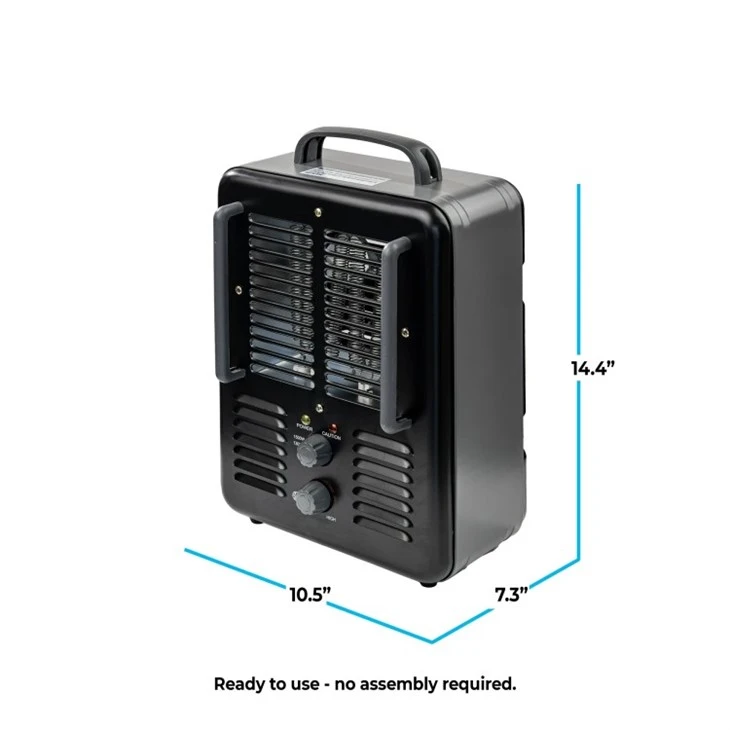
If you have a larger space, like a workshop or a milkhouse, our Large Milkhouse Heater is a great choice. It has a powerful heating element and a high - speed fan to ensure that the heat is distributed evenly throughout the large area.
Tips for Optimal Heat Distribution
To get the most out of your tower heater, here are some tips:
- Place the heater near a wall or in a corner. This can help to direct the warm air into the room and create a more efficient convection pattern.
- Keep the heater at least three feet away from any flammable objects, such as curtains, furniture, or bedding.
- Use a timer on your heater. You can set it to turn on before you enter the room, so the room is already warm when you arrive. This can save energy and make your heater more efficient.
Conclusion
In conclusion, tower heaters distribute heat in a room mainly through convection, with a little help from radiation. Their tall and narrow design, along with the option of a built - in fan, allows for efficient heat distribution. By understanding how these heaters work and taking into account factors like room size, layout, and insulation, you can choose the right tower heater for your needs.
If you're interested in purchasing our high - quality tower heaters or have any questions about heat distribution, feel free to reach out. We're always happy to help you find the perfect heating solution for your space. Let's start a conversation about your heating needs and how our products can meet them!
References
- "Heating and Cooling Systems" by Energy.gov
- "Understanding Heat Transfer" by ScienceDirect


